Video Call Before You Meet: Why Verified Platforms Matter
Last Updated: March 2026
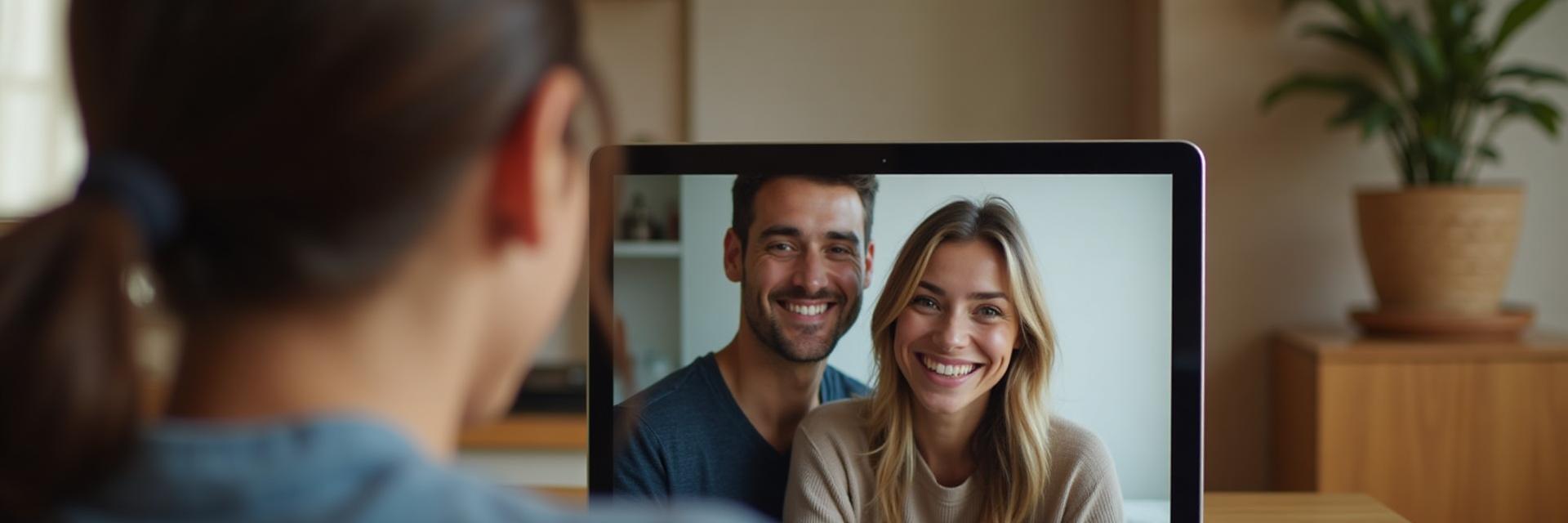
Why Should You Video Call Before Meeting Someone From a Dating App?
💡A 5-minute video call confirms the person matches their photos, eliminates 95% of catfishing risk, and gives you a genuine sense of chemistry before committing to a date.
The video call is the single most effective safety step any online dater can take before meeting in person. It takes five minutes and it answers the three questions every dater has: Do they look like their photos? Can they hold a conversation? Is there any chemistry?
Dating safety experts, law enforcement agencies, and every major dating platform recommend video calling before a first meeting. Yet surveys suggest only around 40% of online daters actually do it. This article explains why you should — and what to watch for.
What Does a Video Call Reveal That Messages Don't?
💡Video calls reveal physical appearance, communication style, body language, emotional authenticity, and environmental clues that text messages simply cannot convey.
Text-based messaging is inherently limited. You can craft the perfect reply, use AI to write witty responses, and present an idealised version of yourself. A video call strips away that polish and reveals the real person — their expressions, their voice, their energy.
The table below shows exactly what each communication method reveals. Notice that video calls answer nearly every key question you'd have before meeting — without the commitment, cost, or safety risk of an in-person date.
| What You Learn | Text Messages | Video Call | In-Person Meeting |
|---|---|---|---|
| Do they match their photos? | No | Yes | Yes |
| Communication style / fluency | Partially | Yes | Yes |
| Body language and eye contact | No | Partially | Yes |
| Emotional authenticity | Hard to tell | Largely yes | Yes |
| Environmental clues | No | Partially | Yes |
| Accent / voice (if claimed local) | No | Yes | Yes |
| Safety risk before meeting | Unknown | Significantly reduced | N/A |
How Do You Suggest a Video Call Without Making It Awkward?
💡Frame it positively — 'I'd love to put a face to the name before we meet' works naturally. Most genuine people are happy to video call; reluctance is itself a signal.
The key is framing. Don't say "I need to verify you're real" — say "I'd love to see your smile before we meet." Practical phrasings that work well:
- "I'd love to do a quick video call before we meet — just to say hi properly!"
- "I always like to video call before a first date. Are you free for 10 minutes this evening?"
- "Would you be up for a video chat? I find it's a great icebreaker before meeting in person."
If they agree — great. If they decline once with a reasonable explanation (bad timing, in a noisy place) — give them another chance. If they consistently avoid it with escalating excuses — that's a significant red flag and one of the strongest indicators of a fake profile.
Remember: anyone genuinely interested in meeting you will want the same reassurance you do. A video call benefits both parties equally.
What Are the Red Flags to Watch for During a Video Call?
💡Red flags include bad lighting hiding their face, camera 'not working', only showing partial face, reading from a script, and a background that doesn't match their claimed location.
A video call is only useful if you know what to look for. Most catfish and scammers will avoid video calls entirely — but some will attempt one while concealing their true identity. The table below covers the most common red flags and how to respond.
No single red flag is definitive proof of deception. But a combination of two or more — particularly "camera not working" paired with any other flag — should give you serious pause.
| Red Flag | What It Might Mean | What to Do |
|---|---|---|
| Camera "broken" or "not working" | Hiding their real appearance | Suggest rescheduling; if twice, move on |
| Very poor lighting / face obscured | Concealing mismatch with photos | Ask them to adjust lighting or move |
| Only showing partial face | Using a filter or hiding features | Note it — consistent avoidance is concerning |
| Reading from a script / unnatural pauses | Someone else wrote their messages | Ask spontaneous personal questions |
| Background inconsistent with claims | May not live where they say | Pay attention but don't interrogate |
| Extremely short call / rushes to end | Avoiding extended scrutiny | Suggest a longer call another time |
| Audio-visual sync issues | Possible deepfake technology | Pay attention to lip-sync accuracy |
Can Deepfake Technology Fool Video Calls?
💡Deepfake video calls are possible but still imperfect — watch for lip-sync delays, unnatural blinking, lighting inconsistencies, and reluctance to turn their head.
AI-generated video calls are the newest threat. Current deepfake technology can superimpose a face in real-time, but the technology has tells: lip movements slightly lag behind speech, blinking patterns can be unnatural, head turns cause momentary distortion, and lighting on the face may not match the background.
Tips for spotting deepfakes during a video call:
- Ask them to turn their head side to side — deepfakes struggle with profile angles
- Watch for lip-sync accuracy, especially with fast speech
- Note if their blinking seems regular and mechanical vs natural
- Ask them to hold an object near their face — deepfakes struggle with occlusion
- Check if the lighting on their face changes naturally when they move
This is an evolving area. The safest approach combines video calling with platform-level verification (like Smooch's ID + selfie matching through Yoti). Personal vigilance plus independent verification provides the strongest protection available.
Why Does Platform-Level Verification Matter More Than Personal Video Calls?
💡Personal video calls are helpful but subjective. Platform verification through ID checks, facial matching, and AI detection provides independent, objective confirmation.
A video call tells you the person looks like their photos. Platform-level verification tells you the person's identity has been independently confirmed against government-issued documents. These are fundamentally different levels of assurance.
The most effective approach is both: use a verified platform AND video call before meeting. Belt and braces. The platform provides objective, independent verification; the video call gives you a personal, subjective read on chemistry and authenticity.
| Verification Method | What It Confirms | Reliability |
|---|---|---|
| Personal video call | Person matches photos | Good (subjective) |
| Platform photo verify (selfie match) | Person matches a submitted photo | Moderate (no ID check) |
| Smooch verification (ID + selfie + card + email + AI) | Person is who they claim to be, legally verified | High (multi-layered, independent) |
What Are the Best Practices for a Pre-Date Video Call?
💡Keep it to 10–15 minutes, use it to confirm identity and chemistry, stay in a well-lit space, and treat it as a friendly icebreaker rather than an interview.
- Keep it casual — 10–15 minutes is plenty. You're saying hello, not conducting an interrogation.
- Choose a well-lit, quiet space — good lighting and minimal background noise show respect and make a better impression.
- Have the same energy you'd bring to a first date — smile, be warm, show genuine interest.
- Ask about their day, their interests, what they're looking for — light, open-ended questions that let the conversation flow.
- Pay attention to whether the conversation flows naturally — chemistry (or lack of it) is usually apparent within minutes.
- Don't treat it as an interrogation — it should feel like a warm-up, not a security screening. The verification is a bonus; the connection is the point.
Think of the video call as the real first impression. The dating profile got their attention; the messages built curiosity; the video call confirms whether there's genuine potential. It's the bridge between digital interest and real-world connection.